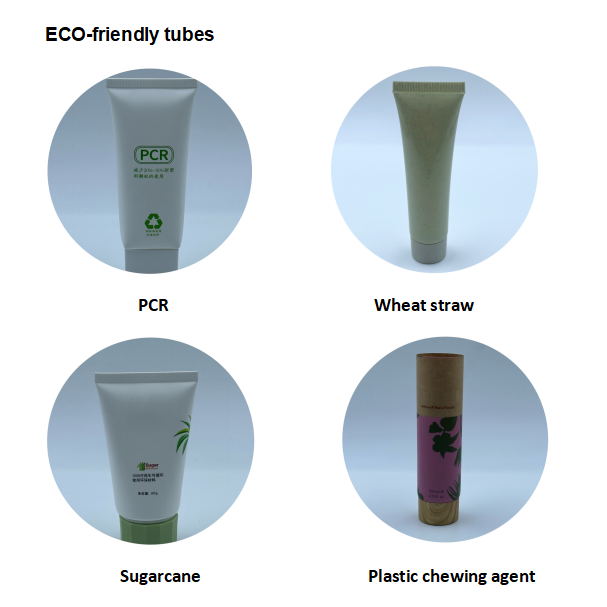
In the context of global environmental protection and the upgrading of consumer demand for sustainable development, the cosmetics industry is gradually moving towards green and low-carbon development. As an important part of cosmetic packaging, hoses are widely used in daily skincare, hair care, and functional cosmetics. Choosing environmentally friendly packaging materials not only helps reduce environmental pollution but also enhances brand competitiveness and resonates with eco-conscious consumers. Zoomri focuses on four mainstream eco-friendly materials for cosmetic hose packaging——PCR, Wheat Straw, Sugarcane, and Plastic Chewing Agent——detailing their characteristics, application scenarios, and advantages, to provide practical reference for brands in material selection.
1. PCR (Post-Consumer Recycled Plastic)
PCR, short for Post-Consumer Recycled Plastic, is a circular and eco-friendly material produced by recycling, sorting, cleaning, and reprocessing discarded plastic products (such as plastic bottles, packaging boxes) and then blending them into the raw materials for cosmetic hose production. It is one of the most mature and widely used eco-friendly materials in the current cosmetic packaging industry, with obvious advantages in environmental protection and cost-effectiveness.
In terms of environmental performance, PCR can effectively reduce the consumption of virgin plastic, reduce energy consumption and carbon emissions in the production process, and alleviate the pressure of “white pollution” caused by plastic waste. Through scientific formula adjustment, such as adding antioxidants, reinforcing agents, and barrier modifiers, high-content PCR hoses can achieve mechanical properties comparable to traditional PE/PP hoses, including good flexibility, impact resistance, and processability, fully meeting the national safety standards for cosmetic packaging.
Application Scenarios: PCR hoses are highly versatile and suitable for most cosmetic categories. They are especially ideal for daily-use cosmetic hoses, such as facial cleanser, hand cream, body lotion, toner, and makeup remover. They are also suitable for trial-sized products and mass-market cosmetic packaging, where cost-effectiveness and environmental protection are both considered. For functional products such as sunscreen and mild acne-removing serums, PCR hoses with added barrier layers can be used to meet the basic protection needs of active ingredients. They are not recommended for high-concentration acid, high-alcohol, or strong-oil products that may accelerate the aging of recycled plastic.
2. Wheat Straw
Wheat straw-based cosmetic hoses are composite eco-friendly materials made by mixing wheat straw fibers——an agricultural by-product generated after wheat harvesting——with food-grade plastic substrates (such as PE, PP). As a renewable agricultural resource, wheat straw can reduce the dependence on petroleum-based plastics, and its production process requires lower energy consumption, which significantly reduces the carbon footprint of packaging production.
The biggest feature of wheat straw hoses is their good biodegradability. Under natural conditions (such as soil and compost), they can decompose into organic substances within a certain period, avoiding long-term environmental pollution. In addition, they have the advantages of sturdiness, durability, and food safety, without any harmful substances, which is in line with the positioning of natural and organic cosmetic brands. The natural texture of wheat straw can also enhance the brand’s green and natural image, bringing a unique sensory experience to consumers.
Application Scenarios: Wheat straw hoses are most suitable for natural, organic, or plant-based cosmetic packaging, such as organic facial masks, herbal hand creams, plant essence lotions, and gentle baby skincare products. They are also suitable for niche brands that focus on “natural, pure” positioning and pursue product consistency with packaging. Due to the characteristics of straw fibers, they are not suitable for high-oil, high-alcohol, or strong-functional products (such as high-concentration retinol serums, acid exfoliants), which may corrode the fiber structure and affect the service life of the hose.
3. Sugarcane
Sugarcane-based cosmetic hoses are a new type of bio-plastic packaging made from sugarcane, a green renewable plant resource. They are also known as “carbon-neutral packaging” because sugarcane absorbs carbon dioxide from the atmosphere during its growth, which offsets the carbon emissions generated during the production and use of the hose, achieving carbon neutrality throughout the life cycle.
Compared with traditional plastic hoses, sugarcane hoses have excellent environmental performance——they are 100% recyclable and can be degraded into non-toxic and harmless substances in natural environments. At the same time, they are non-toxic, odorless, and have good compatibility with cosmetic ingredients, fully meeting the safety requirements for cosmetic packaging. The surface of sugarcane hoses has a natural matte texture, which is high-end and simple, and can be customized with printing to meet the design needs of different brands.
Application Scenarios: Sugarcane hoses are widely applicable to high-end organic skincare, hair care, and sensitive skin-friendly cosmetics. They are especially suitable for high-end skincare products such as facial serums, essence oils, anti-aging creams, and eye creams, as well as natural hair care products such as shampoo, hair masks, and hair oils. They are also suitable for organic cosmetic brands that pursue “zero carbon” and “pure natural” positioning, helping brands establish a high-end and eco-friendly image. Due to their good barrier performance, they can also be used for low-irritation functional products such as physical sunscreen.
4. Plastic Chewing Agent (Biodegradable Plastic Modifier)
Plastic Chewing Agent, as a biodegradable plastic modifier, is not an independent packaging material but a functional additive added to traditional plastic hose production to improve the biodegradability of plastic materials. It can accelerate the degradation rate of plastic hoses in natural environments (such as soil, water), reducing the generation of “white pollution” and avoiding long-term environmental harm.
The core advantage of plastic chewing agents is that when added in an appropriate proportion (usually 5%-15%), they will not affect the basic performance of the hose, such as flexibility, sealing, adhesion, and pressure resistance, ensuring that the hose can effectively protect the cosmetic contents. It is a cost-effective eco-friendly modification solution for brands that want to upgrade their existing plastic hoses to be more environmentally friendly without changing the main production process or increasing too much cost.
Application Scenarios: Plastic chewing agents are suitable for all types of traditional plastic cosmetic hoses that need to improve environmental performance, including PE, PP hoses for daily cosmetics (cleanser, hand cream), functional cosmetics (sunscreen, hair removal cream), and trial-sized product hoses. They are particularly suitable for brands with mature traditional plastic production lines, which can achieve environmental transformation at a low cost without adjusting production equipment. It should be noted that the selection of plastic chewing agents must comply with cosmetic packaging safety standards to ensure no harm to human health and the environment, and they are not suitable for hoses that need to be stored for a long time in extreme environments (high temperature, high humidity).
In summary, PCR, Wheat Straw, Sugarcane, and Plastic Chewing Agent each have their unique advantages and application scenarios. Brands should comprehensively consider their product positioning, target audience, functional requirements, and cost budget when selecting eco-friendly materials for cosmetic hoses, so as to achieve the balance between environmental protection, product protection, and brand image.